 English
Pre-A1
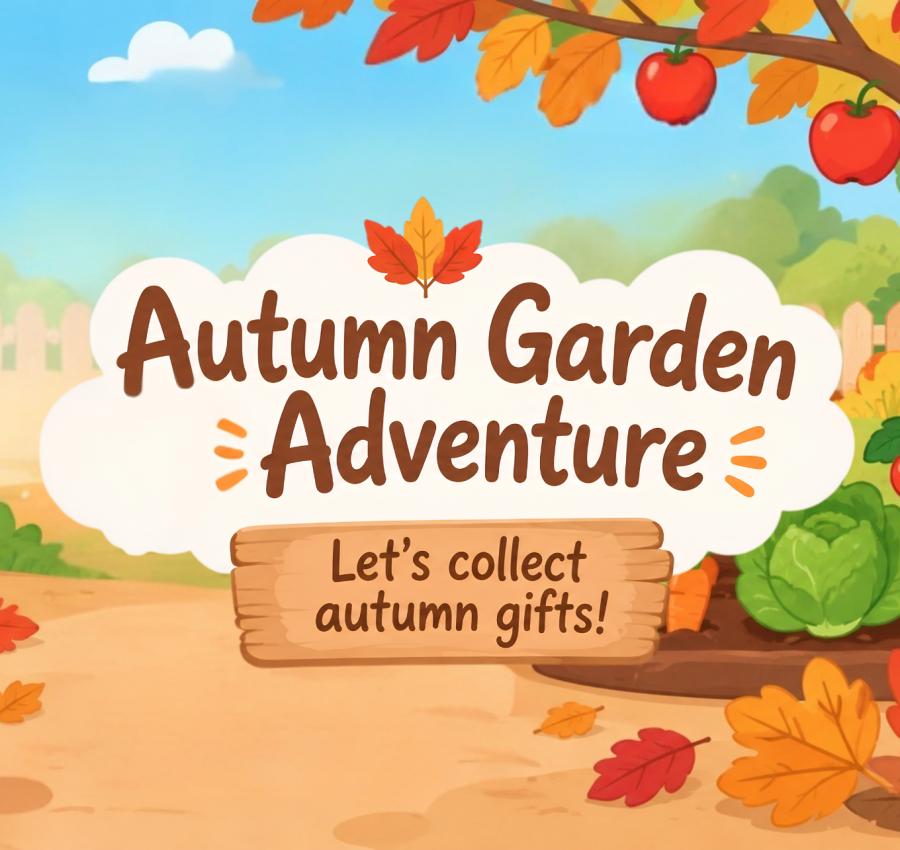
Autumn Garden Adventure – Fruits & Vegetables English Lesson for Kids
YEARS: Preschoolers, primary school
PAGES: 48
Published: August, 18, 2026
English
Welcome to Autumn Garden Adventure – a bright and interactive English lesson where young learners explore an autumn garden, collect vegetables and fruit, practise new vocabulary and complete fun seasonal challenges. 🍎🥕🍂
This lesson is designed for preschool, kindergarten and beginner English learners who are starting to build their basic food vocabulary and speaking confidence. Children follow a friendly character through a colourful autumn garden and gradually discover vegetables, fruit, growing actions, listening activities, matching tasks and simple speaking games.
The lesson begins with a warm “Hello, Autumn!” activity where children look at the garden and talk about what they can see. This creates an easy visual introduction to the topic and prepares learners for the new vocabulary.
The first part of the lesson focuses on vegetables. Children are introduced to the main target words through large, clear visual flashcards with audio support:
carrot, potato, cabbage, tomato, cucumber
Each vegetable is presented separately so children can focus on pronunciation, recognition and meaning before using the words in interactive activities.
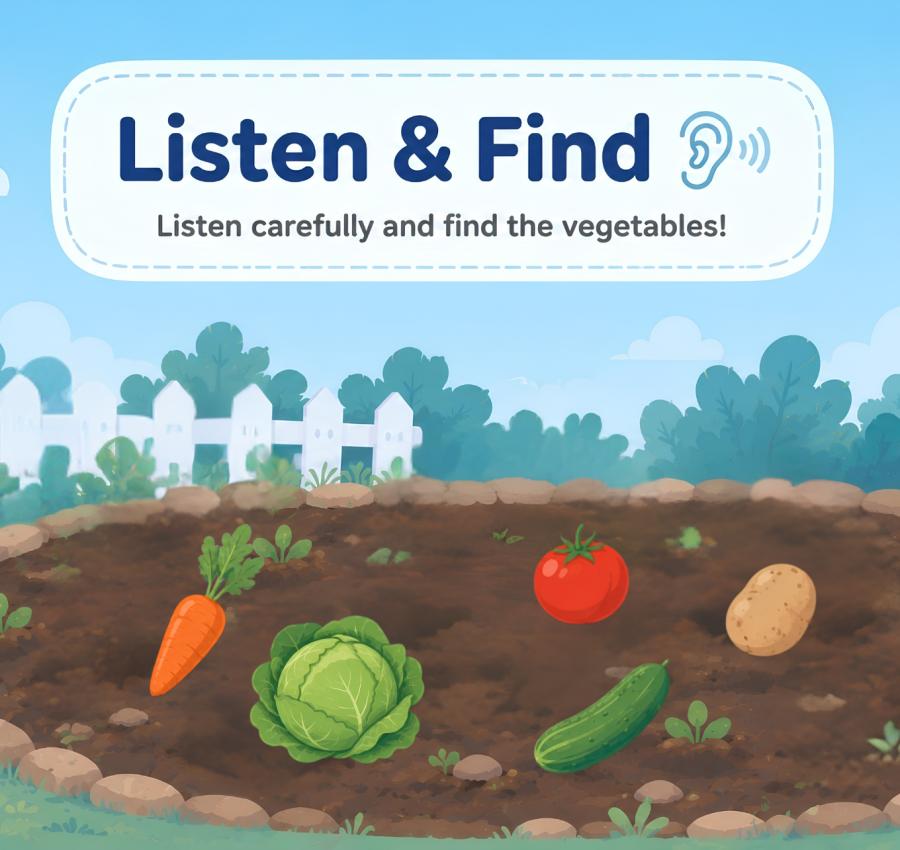
Students then practise recognising the vegetables through Listen & Find, where they listen carefully and identify the correct item in the garden. In “What is hiding?”, children look at partially hidden vegetables and guess which one they can see. These activities strengthen visual memory, listening comprehension and vocabulary recall.
The lesson also includes a playful “Find the Vegetable” activity where students search the garden and identify the correct vegetable. This turns vocabulary revision into a small observation challenge rather than simple repetition.
One of the key sections of the lesson is “Grow, Vegetables, Grow!”. Children learn that different vegetables grow in different ways and practise simple movement-based language.
For example:
Carrot – grow, grow, grow!
Potato – down, down, down!
Cabbage – open your leaves!
Students can copy the character’s movements while repeating the words and actions. This makes the lesson especially suitable for young learners who benefit from Total Physical Response and movement-based learning.
The “Pick the Vegetables!” and “Harvest Game” activities allow children to collect the vegetables they have learned. Students recognise the correct items and place them into the basket, reinforcing the connection between the spoken word and the visual object.
The Vegetable Basket activity provides another opportunity to review the vocabulary and notice which item is missing.
After exploring the vegetable garden, children move to the Fruit Garden. A new visual scene introduces the second part of the lesson and gives learners a sense of progression and adventure.
Students discover and practise:
apple, pear, banana, grapes, orange
Each fruit is introduced with a clear visual card and audio support. Children can listen to the pronunciation, repeat the word and connect it with the picture.
The lesson then shows the fruit growing naturally in the garden. Children can see apples on an apple tree, pears on a pear tree, bananas, grapes and oranges in colourful outdoor scenes. These visuals help learners understand the vocabulary in context rather than seeing the words only as isolated flashcards.
Students practise recognising the fruit through Listen & Pick, where they listen and choose the correct fruit from the basket.
In “Match the Fruit”, learners match the whole fruit with the corresponding picture or section. This encourages careful observation while reviewing vocabulary.
The lesson then brings fruit and vegetables together in the activity “Sort the Autumn Gifts”. Children decide whether each item belongs in the Vegetables basket or the Fruit basket.
This activity develops important early categorisation skills while naturally introducing the concepts:
fruit
vegetable
Students need to recognise the vocabulary, remember the categories and make a decision independently.
The lesson also includes a visual guessing activity where children identify a hidden item before moving to the final speaking task.
In “My Autumn Basket”, students choose their favourite fruit and vegetables from everything they have learned during the lesson. This provides a simple and accessible opportunity for personalised speaking.
Depending on the learner’s level, the teacher can encourage structures such as:
I like apples.
I like carrots.
My favourite fruit is a banana.
My favourite vegetable is a cucumber.
For younger children or absolute beginners, simply naming the chosen items is also a valuable speaking outcome.
The lesson finishes with a colourful “Great Job!” slide showing a full autumn basket. This gives children a clear sense of completion and provides one final visual review of the vocabulary.
basic vegetable vocabulary;
basic fruit vocabulary;
recognising fruit and vegetables visually;
listening and identifying the correct picture;
repeating and pronouncing new English words;
understanding the difference between fruit and vegetables;
sorting objects into categories;
following simple instructions;
recognising partially hidden objects;
movement vocabulary connected with growing plants;
simple speaking about favourite foods;
observation and visual memory;
making independent choices in English.
carrot, potato, cabbage, tomato, cucumber
apple, pear, banana, grapes, orange
fruit, vegetable, garden, grow, pick, find, listen, basket, autumn
Hello, Autumn!
Children explore the autumn garden and notice different food items.
Vegetable Flashcards
Clear visual introduction to carrot, potato, cabbage, tomato and cucumber.
Listen & Find
Students listen to a vegetable word and find the matching picture.
What Is Hiding?
Children identify vegetables that are partially hidden in the garden.
Find the Vegetable
A visual search activity that reinforces vocabulary through observation.
Grow, Vegetables, Grow!
Children learn simple actions connected with how vegetables grow.
Carrot – Grow, Grow, Grow!
A movement activity connected with the target vegetable.
Potato – Down, Down, Down!
Students use movement to understand that potatoes grow underground.
Cabbage – Open Your Leaves!
A simple action-based vocabulary activity.
Pick the Vegetables!
Children identify and collect the correct vegetables.
Harvest Game
Students harvest vegetables and place them into a basket.
Vegetable Basket – What’s Missing?
A memory and vocabulary review activity.
Welcome to the Fruit Garden
A colourful transition into the fruit vocabulary section.
What’s in the Garden?
Children look around the fruit garden and identify familiar items.
Fruit Flashcards
Introduction to apple, pear, banana, grapes and orange.
Fruit Garden Scenes
Learners see each fruit growing naturally in the garden.
Listen & Pick
Children listen and choose the correct fruit.
Match the Fruit
Students match fruits with their corresponding pictures.
Sort the Autumn Gifts
Children sort mixed food into fruit and vegetable categories.
My Autumn Basket
A personalised final speaking activity where children choose their favourite items.
Great Job!
A positive final review and celebration of everything learned.
English vocabulary • listening comprehension • pronunciation • speaking • categorisation • observation • memory • matching • following instructions • movement and coordination • decision-making
Preschool • Kindergarten • Young Learners • Beginner English • ESL/EFL • Online English Lessons • Interactive Whiteboards • Individual Lessons • Small Groups • Autumn Lessons • Food Vocabulary Lessons
Autumn Garden Adventure combines seasonal learning, food vocabulary and interactive play in one structured lesson. Children do not simply memorise a list of words – they explore a garden, search for hidden vegetables, move like growing plants, harvest food, sort fruit and vegetables and create their own autumn basket.
The combination of visual vocabulary cards, audio, movement, matching, listening, sorting and speaking activities provides repeated exposure to the target language while keeping young learners actively involved throughout the lesson. 🍂🥕🍎

 English
 English
 English
 English